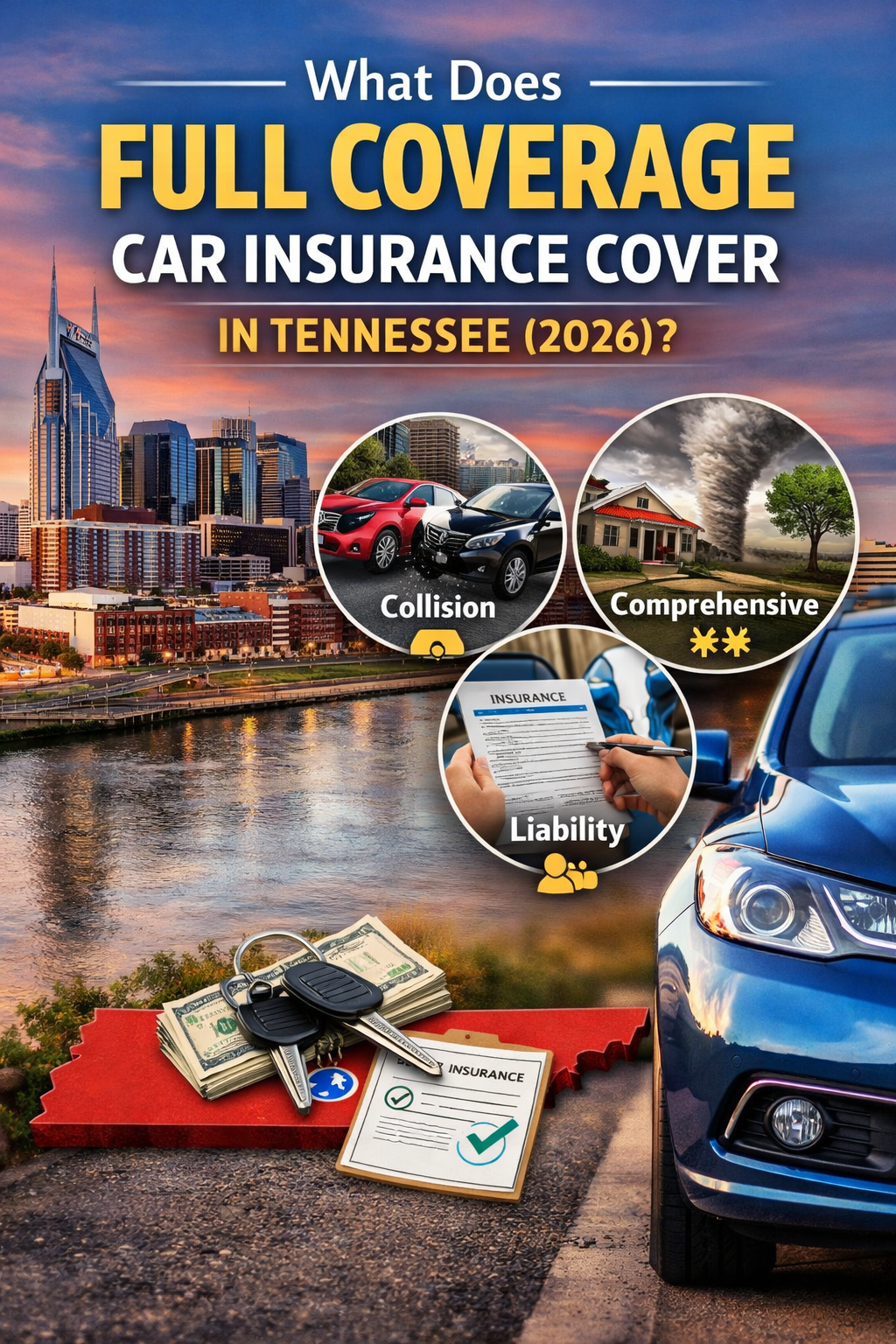
Many drivers in Tennessee choose full coverage car insurance for added protection, but not everyone fully understands what it actually includes.
Knowing what full coverage really covers — and what it doesn’t — can help you avoid unexpected out-of-pocket costs after an accident.
Quick Answer:
Full coverage car insurance in Tennessee typically includes liability, collision, and comprehensive coverage — but it doesn’t cover everything.
Many drivers are surprised to learn there are still gaps in protection depending on their deductible and policy limits.
What Full Coverage Typically Includes:
Liability Coverage:
This covers damage or injuries you cause to others in an accident. Tennessee requires minimum liability coverage, but full coverage policies often include higher limits.
Collision Coverage:
This helps pay for repairs to your vehicle if you’re involved in an accident, regardless of who is at fault.
Comprehensive Coverage:
This covers damage to your vehicle from non-collision events such as theft, vandalism, fire, or severe weather.
What Full Coverage Does NOT Cover:
Full coverage does not include everything. It typically does not cover:
- Routine maintenance
- Mechanical breakdowns
- Intentional damage
- Personal items inside the vehicle
Additional coverages like roadside assistance or rental reimbursement may be added separately.
What Most Drivers Don’t Know:
Most drivers don’t realize that “full coverage” is not an official insurance term. It simply refers to a combination of coverages. The exact protection you have depends on your policy limits and selected options.
Because of this, two drivers with “full coverage” can have very different levels of protection.
Real Example:
For example, a Tennessee driver with full coverage may have collision and comprehensive protection, but still face out-of-pocket costs if their deductible is high. Another driver with lower deductibles may pay more monthly but less in the event of a claim.
Is Full Coverage Required in Tennessee?
No, full coverage is not required by law. However, if you have a loan or lease on your vehicle, your lender will usually require it.
When Should You Consider Full Coverage:
- When your vehicle has higher value
- When you cannot afford out-of-pocket repairs
- When you want broader protection beyond liability
Get a Free Insurance Quote Review:
If you’re unsure whether your current policy gives you enough protection, you can compare your coverage and explore better options.
👉 Get a Free Car Insurance Quote Review → Make Sure Your Coverage Actually Protects You
You May Also Want to Read:
- Is Car Insurance Going Up in Tennessee in 2026?
- How Your Credit Score Affects Car Insurance Rates in Tennessee
- Cheapest Car Insurance in Tennessee (2026 Guide)
What Most Tennessee Drivers Don’t Realize:
Many drivers assume they’re fully covered until they actually need to file a claim. In reality, coverage gaps are common, especially when policies haven’t been reviewed in a while. Even small differences in coverage can lead to large out-of-pocket costs after an accident.
This is why many drivers in Tennessee choose to review their current policy and compare options to make sure they’re not overpaying or undercovered.